This blog is a follow-up to our previous discussions on creativity. Last time, we established that creativity is a means of producing original ideas which have value, i.e. a purpose, or are highly skilled. It is something that applies to every role or career, and should be encouraged and nurtured to develop from early on in a person’s life. Applied specifically to art and design, a piece of work is generally considered to be 'art' if it either shows a highly refined skill, or evokes some emotion in the viewer of the piece. Then in theory, art should be accessible to anyone with no room for elitism, but we know that's not the case.
After doing some research as to what other people define as creativity, specifically within video games, I came across this article which cited Little Big Planet as a game which stood out concerning Sony’s creativity, as opposed to Playstation Home which wasn’t as successful as it’s competitors. I've only played LBP game recently, and although the concept of a side-scrolling platform game isn’t original anymore, there are small aspects that stood out such as the variety of minigames, and how you can ‘stamp’ your character and home with pictures or animated objects, or how you can control your character’s individual limbs and expressions. The whole visual style of the game has a sort of universal appeal which has attracted a variety of age groups of both genders.
I liked how the game tries to promote creativity, though the limitations do provide the easy option of making random choices rather than creating ‘original content’. Although this does seem to be possible, it isn’t the main focus or most accessible part of the game, and is more evident in games like ‘Drawn to Life’ for the DS. I also appreciated how LBP didn’t have an obvious bias towards either gender, which is a step towards getting rid of the mentality of ‘girls’ games and boys’ games [although, I think most of these are fine for young kids].
It’s also stated that the best ideas are ‘coincidental’, are usually simple, and have a tendency to stick with you. There is a problem with this theory when it comes to real life, as the ideas you come up with entirely off your own back, as a passing or reoccurring thought, are usually so personal only you yourself would find them interesting. There’s a very low possibility of these types of ideas actually appealing to other people and being recognised as valuable. Valuable ideas are formed by reworking these passing thoughts over and over, by doing research, and surrounding yourself with similar things. That’s why being surrounded by other creative people doing a similar thing to you at University is more motivating than being at home, and keeping up with the art scene and games industry is beneficial, I think, as it is usually quite inspirational. I think it’s important to be critically aware of the industry you want to go into [conerning games, this is something I need to work on].
On a slightly related note, if anyone’s interested in Superflat, I watched a short animation recently by Studio 4 °C, who are probably one of the best commercial studios right now, in my opinion. Their stuff has this amateur feel to it which reminds me of indie festival style anime. Thought I'd share!
Director is Daisuke Nakayama, this one really does look like a hiphop-influenced Imaishi [Dead Leaves, Diebuster]. I do spend quite a lot of time watching cartoons, so when something stands out from the 90% of rubbish Japan produces, I get excited. I’ve never actually wanted to be an animation student though, I know I get too caught up on the small details to churn out the amount of storyboarding, etc that’s required. Of course, Game Art is probably more difficult..!

Showing posts with label creativity. Show all posts
Showing posts with label creativity. Show all posts
Monday, 23 March 2009

Wednesday, 11 March 2009
Week 19
I think it’s very easy for people in our creative industry to dismiss the whole idea of Liberal Arts/academics because they don’t have to deal with that curriculum anymore. For most people who have being aiming for this industry, academic subjects and accolades are just a means to an end which you can easily label as illogical and crap and stifling for creative people, whose talents and interests should have been recognised by educational institutes instead of repressed [one of the main points in the intriguing TED video clip we watched today]. I see the liberal arts and the whole process of compulsory education as a means to attempt to make well-rounded individuals, and the institutions I went through communicated that. I’ve never had any bitter feelings towards the methods of education, and I don’t think studying mathematics and humanities is pointless even if you’re not going to be using those skills in your future career.
I don’t think creative subjects are exactly stigmatised, as my schools have always encouraged me in those areas; my art teacher had blatant disregard for the idea of assessment, and his own work and teaching methods was so concentrated on traditional techniques he was way more focused on getting us to make pieces that looked visually impressive rather than what fitted the mark sheet, thus everything we made was basically extremely shallow, and 6th form graduates from that school had practically zero chance of getting into an art college. My art teacher at a different 6th form college was the opposite, the creative process is supposed to be about reworking ideas until reaching a final outcome, and the marking structure was completely set around supporting/sketchbook work and was meant to run parallel to the actual process of making a painting or sculpture or dress etc. Similarly, in Foundation Art, one part of the course was keeping a creative journal to discuss contemporary artists and their work which might influence you. So while a lot of teaching methods are disengaging and plainly bad, I don’t think the ideas behind marking and grades are' wrong'. I also think that those who’ve worked harder for their studies deserve to be recognised, so I do like the idea of University being a more exclusive thing that only hard workers are able to get to. The problem is what schools value as hard work.
I do have a personal attachment to the values of the education system which makes me biased, mainly stemming from the fact that my working-class parents and grandparents paid for me to go to ridiculously overpriced private school; which was not the pinnacle of effective teaching methods, but it got the results and it was probably an overall step-up from the alternatives. After going through public school, my Dad went back as an adult to get English and Maths GCSEs because he wanted to be acknowledged as an intelligent person as well as the better job prospects, and thus he has this unshakable high regard of the values of academic degrees. To brush them off as worthless lines on a CV, I think would be a disrespect to what my parents did and what they did for me and are doing throughout my own educational process - which is constant support, funding, and reward but never pressure. They’ve always known I was going to study art, and always encouraged me to work for whatever I wanted, and I chose the option of picking up as many good grades as I could along the way because you only have one chance, and my Dad always says he regrets not going down that route. Would he have been happier if he did? I don’t know, but the least I can do is value what’s been given to me when many other people’s creativity is not nurtured or valued by parents or institutions. I think I’m an extremely lucky person in this respect to be from such an encouraging background so out of principle, even though I agree that there some things that are seriously wrong with the system, I take pride in what I’m able to put on my CV even if others think it’s worthless. I think it would be ungrateful, in my own circumstances, not to be even a little bit proud.
I realise I sound like a square, but it’s more just an emotional reaction to what we talked about today. Also, I despise the idea of spending so many years of your life doing something, only to think of it later as a waste of time. I think that’s really negative, and there is always some value in anything. Just watch me eat my words when I end up as a bitter, snarky old lady..!
To actually address the task, I don’t see why you can’t have a highly-trained individual who also has a good liberal arts background. The whole process of going through school is to give you that background, and I see university as the process of training one specific thing. Though I suppose if you think of it that way, it’s best to have a good idea of where you want to end up early on, otherwise three years just isn’t enough to start from scratch. That’s why I think, can I really get to industry-level in 3Dsmax in just 3 years? Well, more like two now. We’ve had our whole lives to practise our traditional art skills; can I really get to the same level in such a short time? I suppose I must think of it as just a different way of applying those skills. I think by a ‘good liberal arts background’, employers want well-rounded individuals who are aware of the world around them. Really, I think there should be much more emphasis in schools on the subjects of cultural studies, debates, politics, current events, morality, that kind of thing, which in my opinion when taught well would be a better way to produce intelligent, aware people rather than the divisions of ‘faculties’ from so early on.
I don’t think creative subjects are exactly stigmatised, as my schools have always encouraged me in those areas; my art teacher had blatant disregard for the idea of assessment, and his own work and teaching methods was so concentrated on traditional techniques he was way more focused on getting us to make pieces that looked visually impressive rather than what fitted the mark sheet, thus everything we made was basically extremely shallow, and 6th form graduates from that school had practically zero chance of getting into an art college. My art teacher at a different 6th form college was the opposite, the creative process is supposed to be about reworking ideas until reaching a final outcome, and the marking structure was completely set around supporting/sketchbook work and was meant to run parallel to the actual process of making a painting or sculpture or dress etc. Similarly, in Foundation Art, one part of the course was keeping a creative journal to discuss contemporary artists and their work which might influence you. So while a lot of teaching methods are disengaging and plainly bad, I don’t think the ideas behind marking and grades are' wrong'. I also think that those who’ve worked harder for their studies deserve to be recognised, so I do like the idea of University being a more exclusive thing that only hard workers are able to get to. The problem is what schools value as hard work.
I do have a personal attachment to the values of the education system which makes me biased, mainly stemming from the fact that my working-class parents and grandparents paid for me to go to ridiculously overpriced private school; which was not the pinnacle of effective teaching methods, but it got the results and it was probably an overall step-up from the alternatives. After going through public school, my Dad went back as an adult to get English and Maths GCSEs because he wanted to be acknowledged as an intelligent person as well as the better job prospects, and thus he has this unshakable high regard of the values of academic degrees. To brush them off as worthless lines on a CV, I think would be a disrespect to what my parents did and what they did for me and are doing throughout my own educational process - which is constant support, funding, and reward but never pressure. They’ve always known I was going to study art, and always encouraged me to work for whatever I wanted, and I chose the option of picking up as many good grades as I could along the way because you only have one chance, and my Dad always says he regrets not going down that route. Would he have been happier if he did? I don’t know, but the least I can do is value what’s been given to me when many other people’s creativity is not nurtured or valued by parents or institutions. I think I’m an extremely lucky person in this respect to be from such an encouraging background so out of principle, even though I agree that there some things that are seriously wrong with the system, I take pride in what I’m able to put on my CV even if others think it’s worthless. I think it would be ungrateful, in my own circumstances, not to be even a little bit proud.
I realise I sound like a square, but it’s more just an emotional reaction to what we talked about today. Also, I despise the idea of spending so many years of your life doing something, only to think of it later as a waste of time. I think that’s really negative, and there is always some value in anything. Just watch me eat my words when I end up as a bitter, snarky old lady..!
To actually address the task, I don’t see why you can’t have a highly-trained individual who also has a good liberal arts background. The whole process of going through school is to give you that background, and I see university as the process of training one specific thing. Though I suppose if you think of it that way, it’s best to have a good idea of where you want to end up early on, otherwise three years just isn’t enough to start from scratch. That’s why I think, can I really get to industry-level in 3Dsmax in just 3 years? Well, more like two now. We’ve had our whole lives to practise our traditional art skills; can I really get to the same level in such a short time? I suppose I must think of it as just a different way of applying those skills. I think by a ‘good liberal arts background’, employers want well-rounded individuals who are aware of the world around them. Really, I think there should be much more emphasis in schools on the subjects of cultural studies, debates, politics, current events, morality, that kind of thing, which in my opinion when taught well would be a better way to produce intelligent, aware people rather than the divisions of ‘faculties’ from so early on.
Saturday, 21 February 2009
Dreams, art, me me me
This morning I had a dream about going to sleep with some kind of rotten meat next to me. No idea why I didn’t just get rid of the meat before sleeping, but I didn’t and when I woke up the next morning there were all these flies and bugs on the walls, including some weird coloured ones but I couldn’t bear to look at them too closely, or my imagination didn’t want to stretch to thinking about insects as I really hate the look of them. Anyway, dream-me knew the meat must be really gross but I didn’t smell or see it [can you imagine smells in your sleep? I don’t think so..] but still knew it was there. So, my Mum happened to be upstairs [we were in some house I didn’t know that resembled a hotel, but my room was the same as here] and I asked her to get rid of it all. Kept saying I can’t do it, I can’t look at it etc and she didn’t really say anything but I knew she’d fix it for me anyway. So, when I woke up for real I did so unpleasantly, looking for something rotten.
So, fortunately I don’t have anything rotten here, apart from maybe the drain which needs a good bleaching, but I was thinking about the dream for a while. Maybe something to do with the massive guilt I had when I broke the hard drive my parents got me, and I knew they’d still pay for it to be fixed/buy a knew one even though it was my fault for always being clumsy and careless. But I think...It’s more to do with that feeling you have when you ignore something for a while, until the point where it’s unbearable and you go crying to someone else to fix it. I don’t think I’m too guilty of that, though everyone must experience that sort of thing to some extent...Usually I don’t think dreams have meanings or anything, but it’s been a while since I felt so emotional over a dream so it must be quite important. I guess the thing I’m guilty over...Is neglecting 3d. Its said that you can do anything if you try hard enough, and generally that’s applied to me, in everything but driving [cannot get my head around it, it’s like I’m mentally disabled or something], and I’m scared it’ll be the same thing with 3d, that I have no hope in hell of ever being good at it. But I doubt it. With some help, I really liked the tree I made, even if it’s just a small accomplishment. I suppose I’m the type of person that expects to be able to do everything art-related straight away, and it’s really not the case. What an irresponsible attitude...
A-Anyway, dreams are a silly topic, so I’ll put something relevant here before posting week 18! It was nice to see Chris’ work on Wednesday, I expected just figurative sculpture for some reason, but seeing the installation work and larger-scale things was very enjoyable...It’s been a while since I looked at fine art at all, last year I was really into it so it was really good to see work which had that emotional quality to it, a nice break from purely commercial stuff. I’ve always said I liked commercial/low-brow art more, but Chris’ stuff reminded me of what the fine art students last year were doing, well more like how they were thinking, basing an idea on something really small and developing it to the point where it’s only traceable back to that point if you’re able to see the whole process.
I think, that’s why a lot of fine art is hard to ‘understand’; either because people go in to a gallery expecting a visual treat or some kind of intellectual explanation, when more of it is based on quite a small idea or feeling, it’s the expression of it which gives it value, and at some point down the line the tools of traditional craftsmanship become unnecessary when it’s abstracted. The artist may still be a good craftsman, but their work might not need those skills to express the idea. For instance, in the fine art group at Leeds last year, for their first project they had to make a collection of every day objects that were interesting in some way, and draw, film, and record them. My friend in that group chose soap, and did things like drawing with them, looking at the textures, and making a kind of shell of the soap out of tracing paper and thread. Recording the sound of soap was pushing it. A lot of those people were pretty good painters and sculptors, but the ones who weren’t did things like video and performance. A lot of people in my graphics group thought it was a load of crap, but I liked all of it! The fine art exhibition was the one of the most interesting at the end of year show. Well, all the groups had good exhibitions, but that one had the most story to it. My first graphics project was making a hundred variations of a backwards letter ‘n’. God knows what Mike and Chris thought that was all about. I didn’t think my portfolio showed enough actual skill, so I stuck a few digital paintings in at the end while my Leeds tutors weren’t looking. But now I understand the projects that we did now, and even though I took Graphics and not Fine Art they share the same processes in the end. That’s why I think it’s good to look at galleries and contemporary art even if you think its crap, because there will be some things that you find interesting and impressive!
Also, I’ll post some of my character work here. Why not?
The descriptions/explanations are all on Facebook so I don’t re-iterate myself here.


So, fortunately I don’t have anything rotten here, apart from maybe the drain which needs a good bleaching, but I was thinking about the dream for a while. Maybe something to do with the massive guilt I had when I broke the hard drive my parents got me, and I knew they’d still pay for it to be fixed/buy a knew one even though it was my fault for always being clumsy and careless. But I think...It’s more to do with that feeling you have when you ignore something for a while, until the point where it’s unbearable and you go crying to someone else to fix it. I don’t think I’m too guilty of that, though everyone must experience that sort of thing to some extent...Usually I don’t think dreams have meanings or anything, but it’s been a while since I felt so emotional over a dream so it must be quite important. I guess the thing I’m guilty over...Is neglecting 3d. Its said that you can do anything if you try hard enough, and generally that’s applied to me, in everything but driving [cannot get my head around it, it’s like I’m mentally disabled or something], and I’m scared it’ll be the same thing with 3d, that I have no hope in hell of ever being good at it. But I doubt it. With some help, I really liked the tree I made, even if it’s just a small accomplishment. I suppose I’m the type of person that expects to be able to do everything art-related straight away, and it’s really not the case. What an irresponsible attitude...
A-Anyway, dreams are a silly topic, so I’ll put something relevant here before posting week 18! It was nice to see Chris’ work on Wednesday, I expected just figurative sculpture for some reason, but seeing the installation work and larger-scale things was very enjoyable...It’s been a while since I looked at fine art at all, last year I was really into it so it was really good to see work which had that emotional quality to it, a nice break from purely commercial stuff. I’ve always said I liked commercial/low-brow art more, but Chris’ stuff reminded me of what the fine art students last year were doing, well more like how they were thinking, basing an idea on something really small and developing it to the point where it’s only traceable back to that point if you’re able to see the whole process.
I think, that’s why a lot of fine art is hard to ‘understand’; either because people go in to a gallery expecting a visual treat or some kind of intellectual explanation, when more of it is based on quite a small idea or feeling, it’s the expression of it which gives it value, and at some point down the line the tools of traditional craftsmanship become unnecessary when it’s abstracted. The artist may still be a good craftsman, but their work might not need those skills to express the idea. For instance, in the fine art group at Leeds last year, for their first project they had to make a collection of every day objects that were interesting in some way, and draw, film, and record them. My friend in that group chose soap, and did things like drawing with them, looking at the textures, and making a kind of shell of the soap out of tracing paper and thread. Recording the sound of soap was pushing it. A lot of those people were pretty good painters and sculptors, but the ones who weren’t did things like video and performance. A lot of people in my graphics group thought it was a load of crap, but I liked all of it! The fine art exhibition was the one of the most interesting at the end of year show. Well, all the groups had good exhibitions, but that one had the most story to it. My first graphics project was making a hundred variations of a backwards letter ‘n’. God knows what Mike and Chris thought that was all about. I didn’t think my portfolio showed enough actual skill, so I stuck a few digital paintings in at the end while my Leeds tutors weren’t looking. But now I understand the projects that we did now, and even though I took Graphics and not Fine Art they share the same processes in the end. That’s why I think it’s good to look at galleries and contemporary art even if you think its crap, because there will be some things that you find interesting and impressive!
Also, I’ll post some of my character work here. Why not?
The descriptions/explanations are all on Facebook so I don’t re-iterate myself here.


Saturday, 17 January 2009
Creativity
1. • Creativity is defined as the tendency to generate or recognize ideas, alternatives, or possibilities that may be useful in solving problems, communicating with others, and entertaining ourselves and others. (page 396)
• Three reasons why people are motivated to be creative: 1. need for novel, varied, and complex stimulation 2. need to communicate ideas and values 3. need to solve problems (page 396)
- Human Motivation, 3rd ed, Robert E. Franken.
I like the ideas presented in this article, particularly that creativity is not limited to the arts; instead it is a requirement for everything we do that needs independent thinking. Problem solving of any kind requires creativity, I see it as the formulation of ideas which is necessary for an intelligent individual. And since all of us humans are intelligent, as well as some animals, we are all creative. I think it’s sensible to gauge a person’s creativity by how much of that energy is put into use. Using arts as an example, a productive person who fills a sketchbook a month will be said to be more creative than someone who keeps their ideas in their head, but doesn’t act on them. Objectively, I think its fair, because we can’t see inside the heads of others. Their own ideas have to be expressed, creative ideas in the form of drawing/fine art, music, poetry/prose if the individual is interested in those things. Equally, science and mathematics both require creativity to progress. It’s a part of the brain we’re born with in order for us to live, e.g. attaching sharp rocks to sticks to make tools is a creative process. So in answer to the questions in the task description, everyone on a team must be creative individuals, moreso than the average person because their own creative skills are essential to their job and success.
When creativity manifests itself visually, it is usually linked with ideas that seem original in comparison to the rest. Something that is plagiarised has a less creative process to it than an idea that has been fully developed and researched, despite the technical skill. Although it’s fair to argue that nothing is original any more, I don’t think there is a limit to ideas which are different from anything that has been done before. It’s just harder to get to that level. In my opinion, an idea which consists of both research and imagination is extremely creative even if it’s been done before, as it’s very unlikely the two will be that similar, as long as the idea has been refined by the creators own unique imagination, to avoid cliché.
Creativity in games, is something you feel when you get excited about playing, or you notice many things in the game which stand out to you as being interesting, as well as the overall ambiance of the game. From there you can try and guess the creative process of the artist, as however loosely, ideas are based on something real, that is, your own experiences. Some companies I think are particularly visually creative are Monolith, Atlus, and Oddworld Inhabitants. I’ve always been fond of Devil May Cry’s Bosch-inspired architecture and environments, fused with modern day cityscapes.


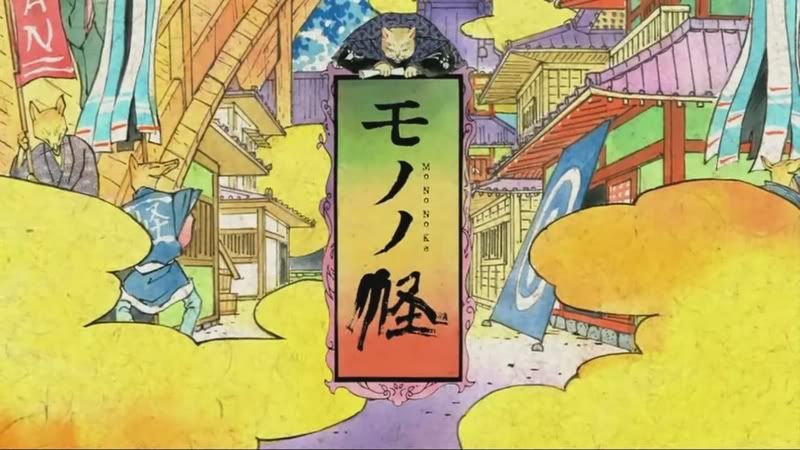
If it’s been done before and if I’m just being ignorant please tell me, but I’d really like to see a game with graphics in a more painterly style [I know of Ookami, though I’ve never got to play it]. Kind of like what Toei did with the Mononoke tv series, which is basically a moving Ukiyo-e, or A Country Doctor by Koji Yamamura, based on Franz Kafka’s short story. Imperfect, hand-drawn images work so well with animation I don’t see why it’s not the same with games. Perhaps the games industry thinks it looks pretentious? I hope not. I think many of their artists will start to come from a background more rooted in fine art with an understanding of periods and leading artists in history, who are more critically aware in general, like on our course where we’re shown films and learn about genre and movements. I love it.
As an artist, you show your creativity by the process that leads up to your results. Explaining that process is helpful sometimes, but usually visual development does not need much annotation, in my experience. When having your work acknowledged, having the technical skill to back up your ideas seems to be important. As long as the progress of your ideas is interesting and easy to follow I’d hope that it would be acknowledged. Some kind of instant appeal that makes an impression like stylised images or bold colour can make work more memorable. But I’m being really vague here.
This essay is quite an interesting break down of the components behind creativity; the un/importance of talent or ‘gift’ has always interested me particularly.
• Three reasons why people are motivated to be creative: 1. need for novel, varied, and complex stimulation 2. need to communicate ideas and values 3. need to solve problems (page 396)
- Human Motivation, 3rd ed, Robert E. Franken.
I like the ideas presented in this article, particularly that creativity is not limited to the arts; instead it is a requirement for everything we do that needs independent thinking. Problem solving of any kind requires creativity, I see it as the formulation of ideas which is necessary for an intelligent individual. And since all of us humans are intelligent, as well as some animals, we are all creative. I think it’s sensible to gauge a person’s creativity by how much of that energy is put into use. Using arts as an example, a productive person who fills a sketchbook a month will be said to be more creative than someone who keeps their ideas in their head, but doesn’t act on them. Objectively, I think its fair, because we can’t see inside the heads of others. Their own ideas have to be expressed, creative ideas in the form of drawing/fine art, music, poetry/prose if the individual is interested in those things. Equally, science and mathematics both require creativity to progress. It’s a part of the brain we’re born with in order for us to live, e.g. attaching sharp rocks to sticks to make tools is a creative process. So in answer to the questions in the task description, everyone on a team must be creative individuals, moreso than the average person because their own creative skills are essential to their job and success.
When creativity manifests itself visually, it is usually linked with ideas that seem original in comparison to the rest. Something that is plagiarised has a less creative process to it than an idea that has been fully developed and researched, despite the technical skill. Although it’s fair to argue that nothing is original any more, I don’t think there is a limit to ideas which are different from anything that has been done before. It’s just harder to get to that level. In my opinion, an idea which consists of both research and imagination is extremely creative even if it’s been done before, as it’s very unlikely the two will be that similar, as long as the idea has been refined by the creators own unique imagination, to avoid cliché.
Creativity in games, is something you feel when you get excited about playing, or you notice many things in the game which stand out to you as being interesting, as well as the overall ambiance of the game. From there you can try and guess the creative process of the artist, as however loosely, ideas are based on something real, that is, your own experiences. Some companies I think are particularly visually creative are Monolith, Atlus, and Oddworld Inhabitants. I’ve always been fond of Devil May Cry’s Bosch-inspired architecture and environments, fused with modern day cityscapes.


If it’s been done before and if I’m just being ignorant please tell me, but I’d really like to see a game with graphics in a more painterly style [I know of Ookami, though I’ve never got to play it]. Kind of like what Toei did with the Mononoke tv series, which is basically a moving Ukiyo-e, or A Country Doctor by Koji Yamamura, based on Franz Kafka’s short story. Imperfect, hand-drawn images work so well with animation I don’t see why it’s not the same with games. Perhaps the games industry thinks it looks pretentious? I hope not. I think many of their artists will start to come from a background more rooted in fine art with an understanding of periods and leading artists in history, who are more critically aware in general, like on our course where we’re shown films and learn about genre and movements. I love it.

As an artist, you show your creativity by the process that leads up to your results. Explaining that process is helpful sometimes, but usually visual development does not need much annotation, in my experience. When having your work acknowledged, having the technical skill to back up your ideas seems to be important. As long as the progress of your ideas is interesting and easy to follow I’d hope that it would be acknowledged. Some kind of instant appeal that makes an impression like stylised images or bold colour can make work more memorable. But I’m being really vague here.
This essay is quite an interesting break down of the components behind creativity; the un/importance of talent or ‘gift’ has always interested me particularly.
Subscribe to:
Posts (Atom)